Official
The Power At Discontent
We need an alliance ready to defend our people
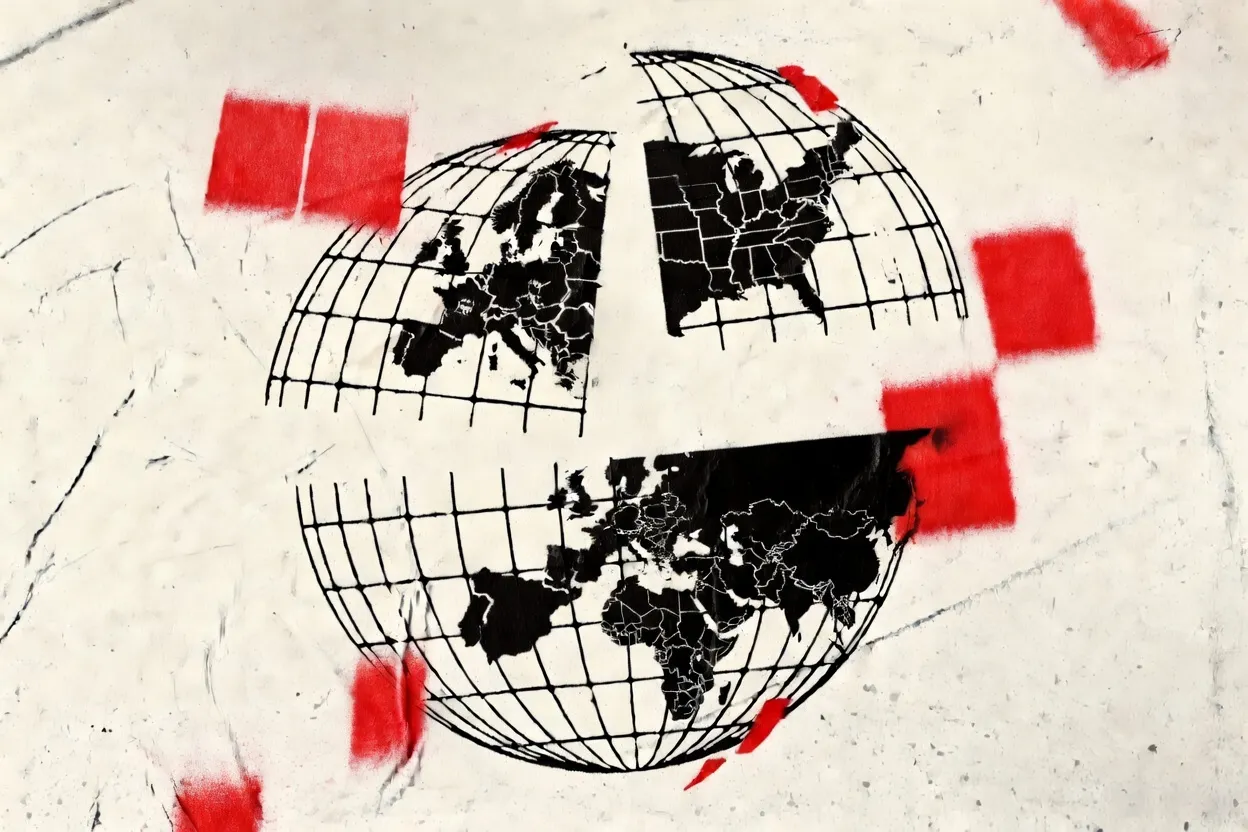
“We need an alliance ready to defend our people, to safeguard our interests, and to preserve the freedom of action that allows us to shape our own destiny – not the one that exists to operate a global welfare state and atone for the purported sins of past generations. An alliance that does not allow its power to be outsourced, constrained, or subordinated to systems beyond its control; one that does not depend on others for the critical necessities of its national life; and one that does not maintain the polite pretense that our way of life is just one among many and that asks for permission before it acts. We can no longer place the so-called global order above the vital interests of our people and our nations.”
-Marco Rubio, United States Secretary of State while addressing the Europeans diplomats & Politicians at Munich
After the end of Second world war, the two powers, Soviet Union Russia and United States emerged as the only super powers of their times, all the other powers fell in the periphery of their influence. The two powers struggle for dominance for over a half century.
In 1947, in an article written by George F. Kennan in Foreign Affairs coined the term “Containment” especially to limit the influence of the Communist Russia within its borders.
At that time, the world was divided between Communist Russia and the Capitalist US Imperialism; the Korean war was the first sign of cold war between two powers, trying to expand their borders to the far-reaching territories. After fighting the existential wars for over five decades, the world was entered another terminal decline, the cold war that spread from the great Urals to the borders of western Europe and to the eastern and southern Asian regions. Both the powers made agreements, built military alliances and fought for maintaining hegemony over the other.
The containment policy that had started against Soviet Union to contain within its borders, the formation of Nato was one of the stratums of greater containment policy. The US went on making military alliances with the countries sitting on the west of berlin wall to stop the spread of communism and engulf the whole region, on the other, Soviet Union also built military alliance with the countries on the east of berlin wall in the form Warsaw.
The cold war kept on fighting for two or three decades on thin “Iron Curtain wall” until the Soviets set foots on the grounds in Afghanistan, the soviets were trapped and couldn’t come out as victorious at the end of the war, the fight resulted in the disintegration of Soviet Union and the countries were successfully taken away from the influence of Communism.
The surprising end of the Cold war brought a shift in power poles and a Uni-Polar World with the US as a sole super-power emerged at the screens of global geo-political landscapes. The preacher of the liberal school of thought Francis Fukuyama celebrated it as their win and considered it as the end of history right after the collapse of the Soviet Union in a book “The End of History and the Last Man”, that the ideological struggle between major political systems (like monarchy, fascism, communism, Islamism) has ended, and the liberal democracy has won.
The theory was inspired by Georg Wilhelm Friedrich Hegel theory of thesis and anti-thesis, resulting as the final synthesis, Karl Marx adapted this idea and argued that:
“History would end up with communism as the final synthesis of ideological conflict between Socialism and Capitalism”. Fukuyama modified this theory and stated that History ends not in communism, but in liberal democracy.”
But the history resulted at odds with Fukuyama with the rise of Communist China, Islamist Iran and resurgence of Russia as key power in its respective regions, the theory was proved foolish in a mere two decades after the fall of USSR.
This was the historical correctness Marco Rubio stated in Munich as:
“The euphoria of this triumph led us to a dangerous delusion: that we had entered, quote, “the end of history;” that every nation would now be a liberal democracy; that the ties formed by trade and by commerce alone would now replace nationhood; that the rules-based global order – an overused term – would now replace the national interest; and that we would now live in a world without borders where everyone became a citizen of the world.
This was a foolish idea that ignored both human nature and it ignored the lessons of over 5,000 years of recorded human history. And it has cost us dearly. In this delusion, we embraced a dogmatic vision of free and unfettered trade, even as some nations protected their economies and subsidized their companies to systematically undercut ours – shuttering our plants, resulting in large parts of our societies being deindustrialized, shipping millions of working and middle-class jobs overseas, and handing control of our critical supply chains to both adversaries and rivals.
We increasingly outsourced our sovereignty to international institutions while many nations invested in massive welfare states at the cost of maintaining the ability to defend themselves. This, even as other countries have invested in the most rapid military buildup in all of human history and have not hesitated to use hard power to pursue their own interests. To appease a climate cult, we have imposed energy policies on ourselves that are impoverishing our people, even as our competitors exploit oil and coal and natural gas and an“India should understand that we are not going to make the same mistakes with India that we made with China 20 years ago. We are not going to let you be able to develop all these markets and the next thing we know you are beating us in a lot of commercial things.”
-Said by US Deputy Secretary of State Christopher Landau right in New Delhi.
However, Samuel P. Huntington argued against the “End of History”, in his book “The clash of civilizations and the remaking of word order” The book was a worldwide hit in the late 1990s and published in some 30 translations, including in Arabic, Chinese, and Bengali. After 9/11, the first part of the title practically became a household phrase. Huntington had been an eminent political scientist at Harvard, but his 1996 book made him a global celebrity.
However, Huntington directly challenged Francis Fukuyama’s thesis in his 1993 article and 1996 book “The Clash of Civilizations and the Remaking of World Order”, Where Fukuyama argued that liberal democracy is the final stage of ideological evolution, Huntington claimed that future global conflict would not be ideological but civilizational and cultural and end of cold war is not the end of history but the beginning of cultural and civilizational conflicts.
He divided the world into major civilizations such as, Western, Islamic, Chinese and many. He predicted future conflicts would occur along “civilizational fault lines” especially between “The West and Islam”.
After 30 years, the idea seems to be deeming away as the conflicts in the world seems to be more systematic, interests and domination based rather than civilizational and cultural. The prime examples are the Russia-Ukraine war, where they both share the same historical borders, cultural and much more, but they are at attrition and the one seems to swallow the other.
Cultures and religions have never been the primary engines of bloodshed and war, but the systems and domination. Despite sharing the same cultural mores, South Korea, North Korea are deeply rooted in the same culture as are China and Taiwan, but they are at discontent.
The Islamist Arab States seems to be shaking hands with Israel while the resistance is at existential attrition against Israel and urging the gulf countries to kick out American soldiers from their countries, the same US that have been bombing Iraq, Syria, Yemen and number of countries across the barren lands of West Asia.
India with its 1.6 billion population seems to be wobbling between US, China and Russia despite sharing its Indic roots with the neighboring countries.
This case speaks volume that the root cause of conflicts has never been either on religion or civilizational, but they are solely based on the interest of states and its people to set their systems and domination over the ideologies of others.
However, both the theories proved wrong and resulted in US’s making the centurial ideological mistake for maintaining power. Now the world seems to be drifting towards more and more multi-polar world, leaving the US pruned and threatened in many regions around the globe.
The Post Cold War Era:
For two and half decades, the hegemony of US did go un-challenged and the international system practically swung on the dictation of US-led western bloc.
Now, the old order seems to be increasingly feeble, contested, and fragmented.
Despite the hopes that followed the fall of the Berlin Wall, the globe did not unite in the embrace of liberal democracy and market capitalism. Instead, alternative centers of power consolidated their positions. China and Russia reasserted themselves as strategic competitors, Iran expanded its regional influence from Lebanon to Yemen, and a cohort of emerging middle powers like Brazil, India, Mexico, Nigeria, Saudi Arabia, South Africa, and Turkey began to reshape global geopolitical scenes.
Geopolitical tensions have further exposed the limitations of the existing order, Russia’s war of attrition on Europe has cracked open the internal divisions of Europe, and reflects that the old system can no longer sustain the West as global imperial state. The very forces once expected to integrate the world trade, energy interdependence, technological exchange, and information flows, now have instead become arenas of competition and fragmentation, Now, they are no longer the primary source of international order.
Indeed, the forces that were supposed to unite the world in trade, energy, technology, and information are now tearing it apart. The Chinese demogorge is displacing the old order that wasn’t set primarily on industry, trade and technology, but the invasions and sabotage. Now the need for industrialization is knocking at the doors of collective west. The middle powers are taking central positions in many of the major commercial supply chains and markets.
The competition between great powers is on the path, as the rivalry between China and the United States defines the framework of geopolitics. The new cold war is knocking the doors, the order, the liberal order has been questioned and the new world order is waiting to be established.
Communist China and Russia, Islamist Iran expanded from Lebanon to Yemen, and the emerging middle powers, including Brazil, India, Mexico, Nigeria, Saudi Arabia, South Africa, and Turkey, have become the game changers. Together, they have the economic means and geopolitical leverage to tilt the global order toward stability or turmoil.
The demand for change is rising: the post-World War II order failed to adequately reflect their interests in the world and give them the positions they deserved. The idea that the US continue to moral police the whole world with big stick is no longer working, even the allies of US are at dissent and considers Washington less as a guarantor of stability as it was after the World War II and more as a source of strategic risk.
The world is drifting towards more of a multi-polar shared world than ever, China and many of the regional countries with the forums like SCO are gradually weakening the existing order and displacing US as the only hegemon of 21st century. If the weak power link doesn’t establish for the transfer of power and other forces don’t fill the vacuum, the world seems to be throttling in greater turmoils.
Countries would have to be given space and position in international institutions and global economy, If the west understands that the global South will be a key part of the future world order, it may be able to buy time, consolidate power and save its seat on the table where the rays of new world order reflects on. Sanctions can no longer prove to be a ‘policy’, sanction is no policy, sooner or later it is going to end, the lack of industrialization has put the US in a position where it must have to share its power position which it has enjoyed for over several decades , If the global West continues its old ways of direct or indirect domination or outright arrogance, it will lose the position in present, so in future, and it will go down the path more quickly than any other has ever witnessed in human history.
A new symmetry of power between the West, East, and global South would produce a rebalanced world order in which countries could address the most pressing global challenges through cooperation and dialogue rather than force and destruction.
This balance would contain competition and push the world toward greater cooperation on the issues of climate, security, and technology that no country can solve alone. The world seems to be standing on the same position where it was after the first world war, where the league of nations was established to create a weak link of dialogue and cooperation between the new emerging nation states to avoid further destruction, but the history resulted at contrast and we witnessed another global catastrophe.
The question again stands before us: whether we will be able to construct a durable architecture of cooperation or follow the same path of league that proved to be failed and led the world to widespread death, destruction, mass displacement and two bombs on Hiroshima and Nagasaki.
The world moves faster and waits for none.ything else – not just to power their economies, but to use as leverage against our own.
And in a pursuit of a world without borders, we opened our doors to an unprecedented wave of mass migration that threatens the cohesion of our societies, the continuity of our culture, and the future of our people. We made these mistakes together, and now, together, we owe it to our people to face those facts and to move forward, to rebuild.”
This proved to be a significant historical and ideological miscalculation, the policy that was driven to make China an outpost to keep a check on expanding Soviet Union, the absence of a sustained containment strategy allowed China the strategic space to consolidate its power and expand its global influence. Now, it is challenging the very powers that had given China a geo-political leverage to counter Soviets expansions.
“India should understand that we are not going to make the same mistakes with India that we made with China 20 years ago. We are not going to let you be able to develop all these markets and the next thing we know you are beating us in a lot of commercial things.”
-Said by US Deputy Secretary of State Christopher Landau right in New Delhi.
However, Samuel P. Huntington argued against the “End of History”, in his book “The clash of civilizations and the remaking of word order” The book was a worldwide hit in the late 1990s and published in some 30 translations, including in Arabic, Chinese, and Bengali. After 9/11, the first part of the title practically became a household phrase. Huntington had been an eminent political scientist at Harvard, but his 1996 book made him a global celebrity.
However, Huntington directly challenged Francis Fukuyama’s thesis in his 1993 article and 1996 book “The Clash of Civilizations and the Remaking of World Order”, Where Fukuyama argued that liberal democracy is the final stage of ideological evolution, Huntington claimed that future global conflict would not be ideological but civilizational and cultural and end of cold war is not the end of history but the beginning of cultural and civilizational conflicts.
He divided the world into major civilizations such as, Western, Islamic, Chinese and many. He predicted future conflicts would occur along “civilizational fault lines” especially between “The West and Islam”.
After 30 years, the idea seems to be deeming away as the conflicts in the world seems to be more systematic, interests and domination based rather than civilizational and cultural. The prime examples are the Russia-Ukraine war, where they both share the same historical borders, cultural and much more, but they are at attrition and the one seems to swallow the other.
Cultures and religions have never been the primary engines of bloodshed and war, but the systems and domination. Despite sharing the same cultural mores, South Korea, North Korea are deeply rooted in the same culture as are China and Taiwan, but they are at discontent.
The Islamist Arab States seems to be shaking hands with Israel while the resistance is at existential attrition against Israel and urging the gulf countries to kick out American soldiers from their countries, the same US that have been bombing Iraq, Syria, Yemen and number of countries across the barren lands of West Asia.
India with its 1.6 billion population seems to be wobbling between US, China and Russia despite sharing its Indic roots with the neighboring countries.
This case speaks volume that the root cause of conflicts has never been either on religion or civilizational, but they are solely based on the interest of states and its people to set their systems and domination over the ideologies of others.
However, both the theories proved wrong and resulted in US’s making the centurial ideological mistake for maintaining power. Now the world seems to be drifting towards more and more multi-polar world, leaving the US pruned and threatened in many regions around the globe.
The Post Cold War Era:
For two and half decades, the hegemony of US did go un-challenged and the international system practically swung on the dictation of US-led western bloc.
Now, the old order seems to be increasingly feeble, contested, and fragmented.
Despite the hopes that followed the fall of the Berlin Wall, the globe did not unite in the embrace of liberal democracy and market capitalism. Instead, alternative centers of power consolidated their positions. China and Russia reasserted themselves as strategic competitors, Iran expanded its regional influence from Lebanon to Yemen, and a cohort of emerging middle powers like Brazil, India, Mexico, Nigeria, Saudi Arabia, South Africa, and Turkey began to reshape global geopolitical scenes.
Geopolitical tensions have further exposed the limitations of the existing order, Russia’s war of attrition on Europe has cracked open the internal divisions of Europe, and reflects that the old system can no longer sustain the West as global imperial state. The very forces once expected to integrate the world trade, energy interdependence, technological exchange, and information flows, now have instead become arenas of competition and fragmentation, Now, they are no longer the primary source of international order.
Indeed, the forces that were supposed to unite the world in trade, energy, technology, and information are now tearing it apart. The Chinese demogorge is displacing the old order that wasn’t set primarily on industry, trade and technology, but the invasions and sabotage. Now the need for industrialization is knocking at the doors of collective west. The middle powers are taking central positions in many of the major commercial supply chains and markets.
The competition between great powers is on the path, as the rivalry between China and the United States defines the framework of geopolitics. The new cold war is knocking the doors, the order, the liberal order has been questioned and the new world order is waiting to be established.
Communist China and Russia, Islamist Iran expanded from Lebanon to Yemen, and the emerging middle powers, including Brazil, India, Mexico, Nigeria, Saudi Arabia, South Africa, and Turkey, have become the game changers. Together, they have the economic means and geopolitical leverage to tilt the global order toward stability or turmoil.
The demand for change is rising: the post-World War II order failed to adequately reflect their interests in the world and give them the positions they deserved. The idea that the US continue to moral police the whole world with big stick is no longer working, even the allies of US are at dissent and considers Washington less as a guarantor of stability as it was after the World War II and more as a source of strategic risk.
The world is drifting towards more of a multi-polar shared world than ever, China and many of the regional countries with the forums like SCO are gradually weakening the existing order and displacing US as the only hegemon of 21st century. If the weak power link doesn’t establish for the transfer of power and other forces don’t fill the vacuum, the world seems to be throttling in greater turmoils.
Countries would have to be given space and position in international institutions and global economy, If the west understands that the global South will be a key part of the future world order, it may be able to buy time, consolidate power and save its seat on the table where the rays of new world order reflects on. Sanctions can no longer prove to be a ‘policy’, sanction is no policy, sooner or later it is going to end, the lack of industrialization has put the US in a position where it must have to share its power position which it has enjoyed for over several decades , If the global West continues its old ways of direct or indirect domination or outright arrogance, it will lose the position in present, so in future, and it will go down the path more quickly than any other has ever witnessed in human history.
A new symmetry of power between the West, East, and global South would produce a rebalanced world order in which countries could address the most pressing global challenges through cooperation and dialogue rather than force and destruction.
This balance would contain competition and push the world toward greater cooperation on the issues of climate, security, and technology that no country can solve alone. The world seems to be standing on the same position where it was after the first world war, where the league of nations was established to create a weak link of dialogue and cooperation between the new emerging nation states to avoid further destruction, but the history resulted at contrast and we witnessed another global catastrophe.
The question again stands before us: whether we will be able to construct a durable architecture of cooperation or follow the same path of league that proved to be failed and led the world to widespread death, destruction, mass displacement and two bombs on Hiroshima and Nagasaki.
The world moves faster and waits for none.